When Infiltration Is Off the Table
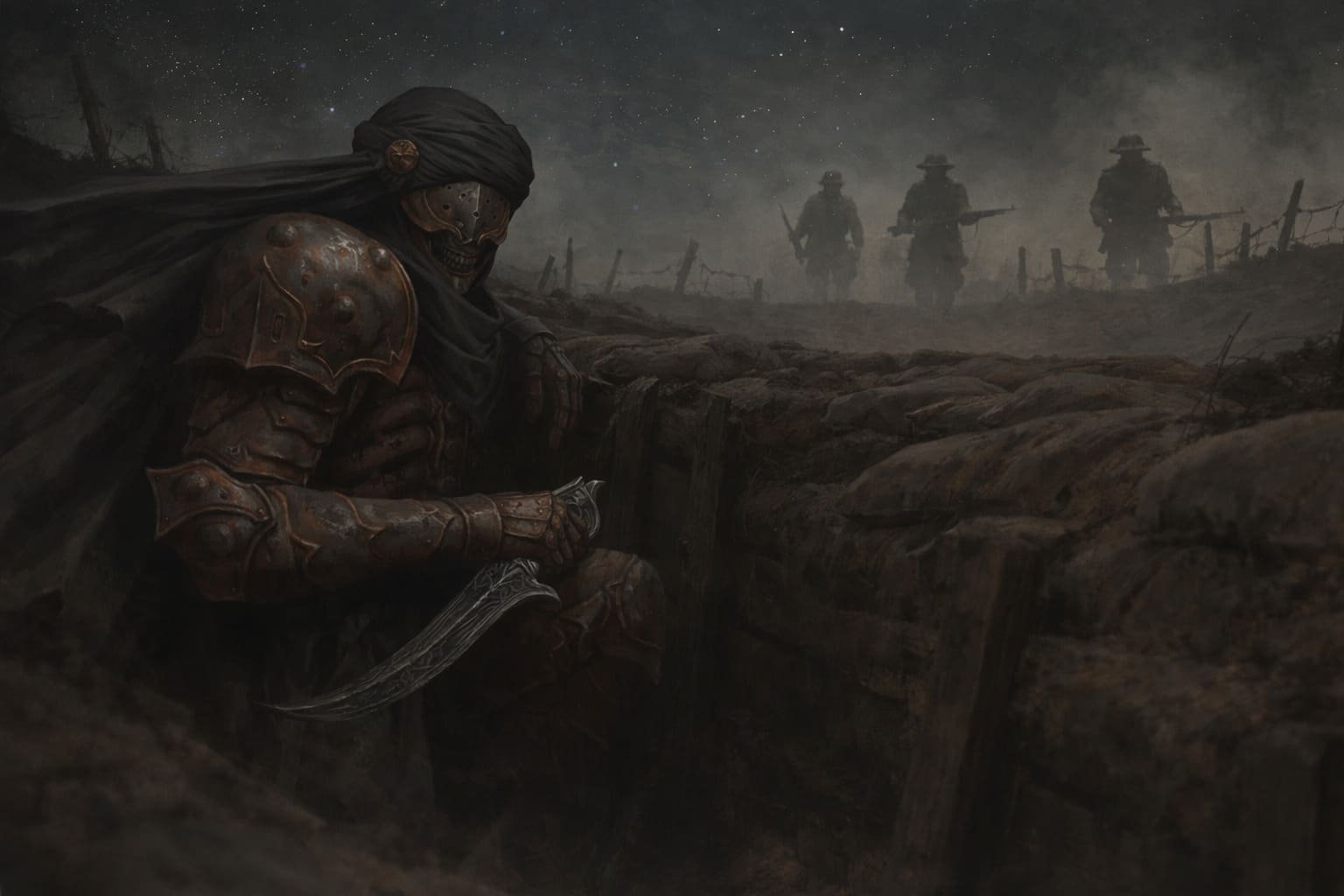
Trench Crusade designers recently explored ways to adjust Infiltrators' abilities when their abilities are restricted by scenarios. The team discovered that certain missions do not permit Infiltration due to narrative or balance concerns, prompting them to suggest alternative solutions while keeping their units' identities intact without disrupting gameplay.
The following ideas were discussed:
allowing limited forward deployment beyond the standard deployment zone,
granting a free move after normal deployment,
improving survivability at the start of the game by treating the model as having Cover while stationary,
or even applying a stronger defensive bonus when beginning the battle in Cover.
These are thoughtful and practical suggestions. They clearly move in the right direction by acknowledging that an Infiltrator who cannot infiltrate risks losing what makes it special. The intent is to compensate for that loss without introducing disruptive mechanics or unintended balance issues.
However, while these solutions are sound in concept, they primarily reinterpret existing mechanics like forward positioning, cover bonuses and defensive modifiers in new ways. Sometimes this results in abilities similar to what already exist on other unit types - for instance sappers or entrenched troops - being available. This leads to an important question: when an Infiltrator becomes restricted they simply become another version of another battlefield role?
Answers may lie elsewhere. If infiltration encapsulates a distinct mindset and battlefield presence, its alternative form must also stand out as being distinctive, not simply being another variation of another unit's specialty.
With that in mind, we propose a few additional concepts that aim to preserve both balance and the singular character of the Infiltrator.
Other secretive and devious ideas
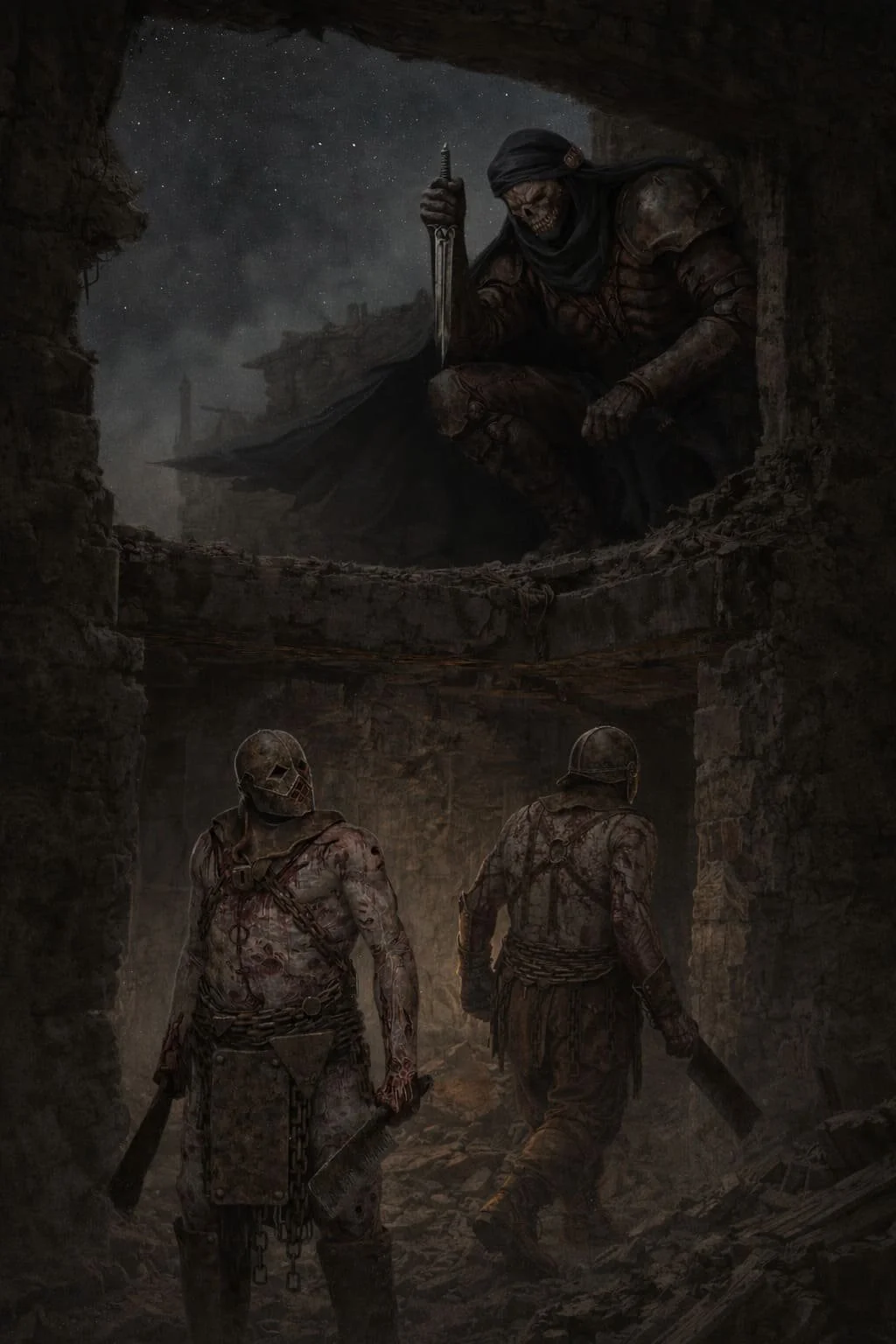
Enemy Deployment Insertion
In scenarios where traditional Infiltration is prohibited, one alternative could allow the model to deploy within the opponent's Deployment Zone rather than its own. Importantly, this would not reduce the distance to objectives in missions where markers must be captured or held — the Infiltrator would still be positioned at an equivalent distance from key objectives as if it had deployed normally on its own side.
This model's main characteristic lies in battlefield presence; rather than charging directly forward, this approach begins from behind enemy lines to create psychological pressure and force their adversary to consider potential threats immediately upon entry to their own territory.
A potential drawback of this approach arises when multiple Infiltrators are deployed at once into enemy zones. Placing them legally while maintaining an acceptable distance from enemy units and avoiding unfair positioning may become challenging; while self-balancing mechanisms will aid model placement, extra care must also be taken to avoid overcrowding or deployment constraints becoming issues.
Delayed Deployment & First-Turn Reposition
Another approach could focus less on forward placement than on information advantage. Here, Infiltrators would be deployed after all enemy units had completed their deployment, giving the controlling player a clearer picture of what will be happening on the battlefield before committing key assets themselves.
To take this idea further, the Infiltrator's starting position could remain flexible until its first activation in Round One. At the beginning of that activation, the model may be repositioned to any legal location within its own Deployment Zone.
This creates a powerful layer of uncertainty. The opponent may see where the model was initially placed, but cannot be certain that this is where it will ultimately begin operating. By delaying its true starting position — potentially activating it late in the first round — the controlling player can react to enemy movements and shift the Infiltrator to a more advantageous flank or weak point.
Psychological pressure rather than raw positional advantage is at the core of this concept, as your opponent never knows from where an Infiltrator will emerge - reinforcing its theme of unpredictability without upsetting scenario equilibrium.
Infiltration Markers
One more radical alternative involves strategically placing infiltration markers across the battlefield instead of actual models. At the start of a game, whoever controls these markers places them anywhere on the table - provided there are restrictions such as being within an inch range from objective markers or key scenario elements.
Each marker corresponds secretly to a specific fighter. Only the controlling player knows which number represents which model.
These markers remain inactive until one of two conditions is met:
1. Proximity Trigger
As soon as an enemy model reaches within a specific range, any marker is replaced by its respective Infiltrator model, making the opponent aware that something was there but unaware what. Until it is revealed, however, its Infiltrator remains hidden until proximity forces its unveiling.
2. Delayed Voluntary Reveal
If no enemy model enters the trigger range, the player can opt to reveal their Infiltrator starting on Turn 3 (or later). At that time, their marker is replaced by their actual model.
This strategy emphasizes psychological warfare over positional advantage. Opponents will recognize potential threats across the board but cannot pinpoint exactly which are genuine and when they will activate; this further strengthens an infiltrator's theme of being an Ugly Predator while still providing structure to timing rules so as to prevent inactivity from persisting indefinitely.
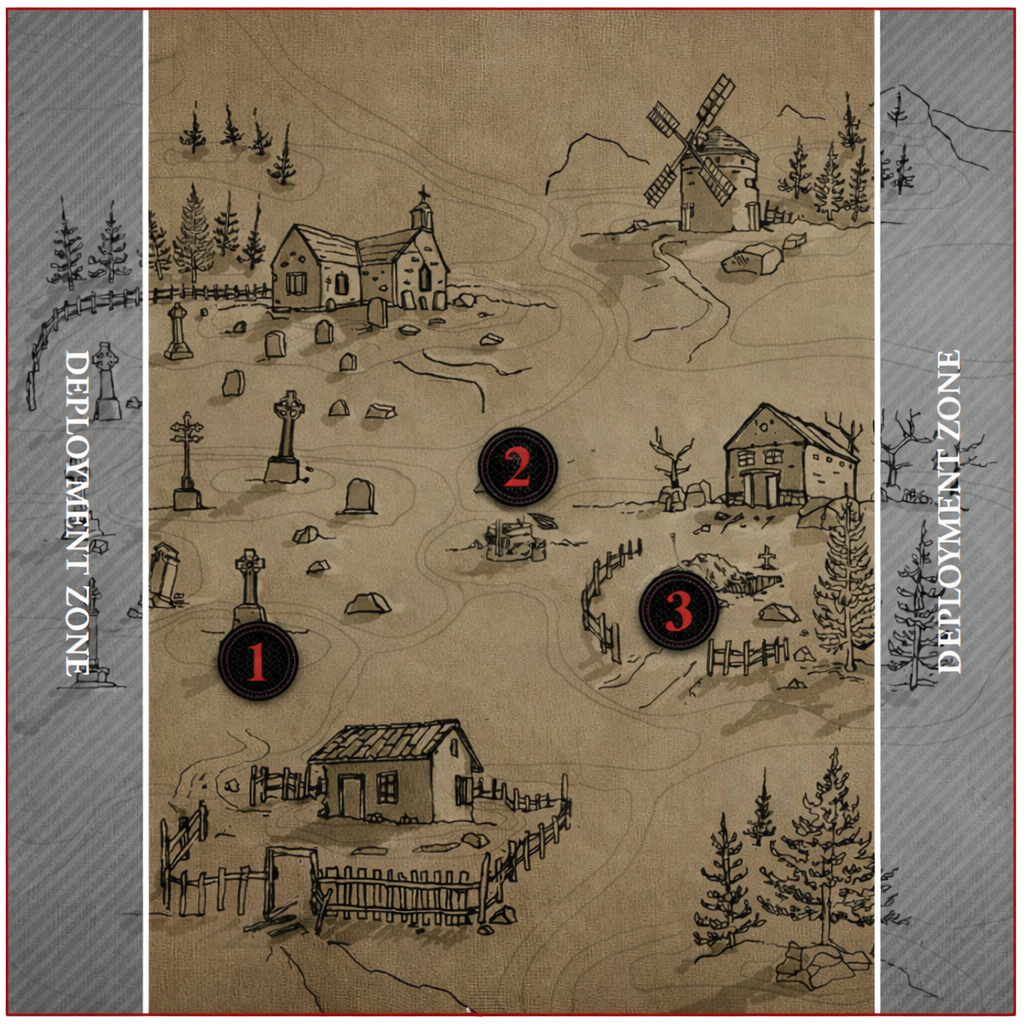
Infiltration markers on battlefield - the player decides where they want to place them and places them numbered on the game board.
This system also adds an extra layer of tension. Even before anything is revealed, the markers themselves can slow the opponent down. Players will move more carefully, rethink their routes, and hesitate before pushing forward.
Uncertainty changes the way battlefields are approached; not just where an infiltrator appears - rather, its constant presence must create uncertainty among his forces as any marker could contain threats, creating hesitation among their ranks and forcing an adversary into hesitation and hesitation with regard to attacking markers.
Importantly, this method would remain optional: players could still deploy Infiltrators normally if desired - however by adding markers the unit gains its own unique battlefield identity that centers on tension, surprise and area denial rather than simple forward positioning.
Hunter Directive / Kill Order
Another idea is to stop thinking about position and start thinking about role.
If you have several Infiltrators in a scenario where Infiltration is limited, you could decide how each of them behaves. Some of them can function normally — capturing objectives, holding ground, playing the mission like any other unit.
But you could also mark some of them with a special order at the start of the game — for example, a Hunter Directive or Kill Order marker. That marker changes what they are there to do.
These marked models:
can still deploy using their Infiltrator rules (if allowed in that version),
can move and fight normally,
but can never capture or hold objectives.
Their job is simple: disrupt, hunt, pressure, kill. They are not there to score points - they are there to cause problems.
This creates a real decision for the player.
Do you want flexible Infiltrators who can help with objectives?
Or do you turn some of them into pure predators and accept that they won't score?
The marker makes this clear on the table and keeps things fair in objective-heavy missions. It also strengthens the theme — some Infiltrators are operatives, others are hunters stalking the battlefield.
Delayed Enemy-Line Arrival
Another concept leans fully into the idea of timing rather than placement. Instead of modifying deployment at the start of the game, Infiltrators would not appear on the battlefield at all until a later turn - for example, beginning from Turn Three.
At the start of Turn Three (or later if chosen by their controlling player), infiltrators may make their debut onto the battlefield by entering from within their opponent's Deployment Zone and being deployed anywhere within that space, provided they keep a minimum distance between themselves and enemy models and follow standard placement regulations.
From that point on, they act like any other unit and take part in the battle as normal.
This approach does two important things. First, it avoids any early-game objective abuse. Second, it still keeps that strong feeling of appearing behind enemy lines and striking where the opponent feels safe.
Substantial mid-game pressure rather than immediate advantage is created through this strategy, while delayed timing gives teams additional strategic choices. A player may decide to bring the Infiltrators in exactly on Turn Three to create sudden disruption — or wait longer to exploit a developing weakness in the opponent's formation.
Instead of altering the initial deployment puzzle, these infiltrators reshape mid-game. Not just forward scouts -- rather, these Infiltrators act like delayed strike forces who arrive when the enemy believes their lines have already been set.
These ideas show that there’s definitely some potential here. It feels like you can come up with something unique when it comes to Infiltration.
At the same time, it shouldn’t become too complicated. Some factions can field quite a lot of Infiltrators, so whatever mechanic is chosen, it shouldn’t slow the game down too much or make things overly complex. That’s not the direction we want to go.
It might also be worth accepting that Infiltration simply won’t be usable in every scenario. And maybe that’s okay.
Perhaps one of the ideas described here will appeal to you or inspire you to come up with new and better ideas.