Rethinking Close Combat
Close combat in Necromunda is one of those topics that has been bothering a large part of the community for a long time now. Every so often it comes back up — in conversations around the table, on forums, in Discords, and in the comments under battle reports. And honestly, it’s not hard to see why.
In short, the core problem is that the current melee rules heavily favor the charging fighter. So much so that a common saying has emerged among players: “If you charge, you win.” And unfortunately… more often than not, that’s true.
On top of that, some Champions can generate a ridiculous number of attacks in close combat. Six? Eight? Ten or even more? Entire fights can be decided before the defender gets to do anything, simply because they have no real chance to react to the sheer avalanche of incoming attacks.
This becomes especially noticeable — and frankly a bit absurd — in Champion-vs-Champion fights. Imagine a Goliath Stimmer charging another Goliath Stimmer. Both are elite melee monsters. On paper, this should be a fairly even, brutal showdown. Instead, the current rule exposes its biggest flaw: the charged Champion just stands there like a punching bag, waiting for the attacker to unload every single attack before getting a chance to respond.
Is that fair? Is it even remotely believable?
Not really.
This can easily lead to frustration, and the game itself can start to take on a very specific shape, where the most important thing to remember is simply to play in a way that avoids being charged. In practice, this means that close combat stops being a spontaneous exchange of blows and instead turns into a game of threat avoidance and distance control.
Council of Arbitrators - The Team
That said, one thing needs to be stated clearly: the current close combat rule is not fundamentally bad. You can get used to it. You can even argue that this is exactly what the system expects from players — caution, planning ahead, and avoiding situations where the opponent gains the initiative through a charge.
The real problem begins when that charge actually happens. In many cases, it becomes genuinely painful to watch your champion helplessly absorb hit after hit, while you — as the player — can do little more than hope they survive with at least one Wound left… assuming they had more than one to begin with. The tension is there, but often not the kind of tension you would expect from brutal, fast-paced close combat in Necromunda.
That’s exactly why, for a long time now, discussions about this issue have been happening in many places — on forums, Discord servers, in comment sections, and in private conversations. The question keeps coming back: what can be done about this, and how could close combat be improved? One idea that appears very often is to simply port or adapt the close combat mechanics from Kill Team. At first glance, this seems like a good solution. Well… it seems like one.
It’s also impossible to ignore the fact that close combat as a system is already quite complex, and modifying it is far from easy. Every change brings further consequences — for weapons, traits, skills, wargear rules, and more.
That’s exactly why the idea came up to approach this problem as a group.
We decided to try to bring together a group of experienced players — many of them well-known and respected within the Necromunda community — and work collectively through discussion, testing, and debate to develop a better close combat system. One that is fairer, more dynamic, and more enjoyable for both players.
Several people were invited to take part in this effort. Some of them probably need no introduction at all.
Damon Johnson - Wellywood Wargaming

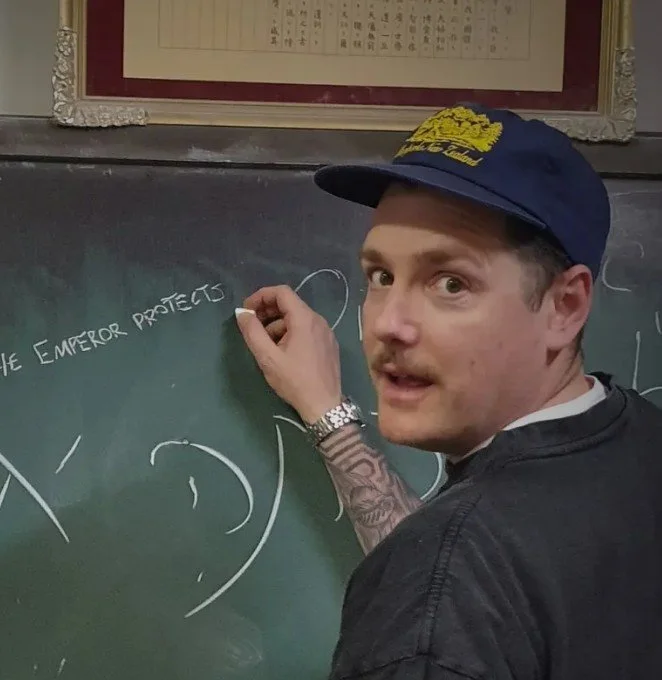
Damon is one of the most recognizable and influential creators in the Necromunda community. Through his YouTube channel and podcast, he regularly dives deep into Games Workshop’s specialist games — especially Necromunda — covering lore, rules, tactics, hobby content, and battle reports. His work has become a valuable resource for players across the community.
And honestly… does Damon even need an introduction?
https://www.youtube.com/@wellywoodwargaming
Battle Realms Workshop - Willem
Willem is a very active member of the Necromunda community, particularly on Discord, where he regularly contributes to discussions about the game’s rules and mechanics. What immediately impressed us was the depth and precision of his rules analysis, as well as his efforts to identify and propose fixes for various issues within the system.
He approaches the game from a very analytical and mathematical perspective, constantly exploring how the mechanics function beneath the surface. At the same time, he is working on a highly advanced reinterpretation of Necromunda’s rules, bringing with him a strong background in game design and system analysis.
Gang Showdown - ComboBreaker

ComboBreaker is the author of excellent community supplements such as Gang Showdown, which many of you have probably heard about. The project introduces a wide range of new mechanics and interesting rules, and it is still actively being developed. A new version in English is expected to be released in the near future.
He is also a very active member of the Necromunda community on Discord, where he frequently participates in discussions and contributes a great deal to conversations about game mechanics and rules design. With his extensive experience in this area, he brings a very thoughtful and analytical perspective to the system.
He is also the creator of the first rule presented in this article — arguably the most advanced and thoroughly developed proposal among those we reviewed, and one that many of you have likely already encountered.
Minowar - ProjectPanda & Linus
And finally, us — the Minowar team, Project Panda and Linus. We both bring extensive experience from the world of games and game design. We have been living and breathing Necromunda since its very beginning in 1995, constantly analyzing its mechanics and looking for ways to refine and improve the gameplay experience.
Finding the Right Path - Our Design Process
We started by reviewing solutions that had already appeared within the community — ideas and rules that someone had tried to develop before us. One of those proposals is Rule #1 – ComboBreaker’s rule, which we present below alongside the others. Its author is Dmitry Timofeevsky, and it has to be said honestly: it makes a strong impression, both mechanically and visually. The amount of work behind it is clearly visible, with great attention to detail and a very well-thought-out structure.
The other rules we present come from different sources: some are based on older editions of Necromunda, some draw inspiration from Kill Team mechanics, and others were created by us from scratch. A few of them try to give Initiative a much bigger role in close combat, while others are simply small adjustments to the current rule — more of a “patch” than a full redesign.
Altogether, we managed to gather several different approaches and — most importantly — test at least some of them in practice. This allowed us to confirm or dismiss many concerns that initially appeared only at the theory stage. Playtests and simulated skirmishes led to long discussions, debates, and careful weighing of arguments for and against each solution. And I’ll be honest: I was convinced this task would turn out to be much easier.
With such experienced and thoughtful Necromunda players on the team, I expected that, in the end, we would be able to develop a coherent ruleset—a single solution we could jointly recommend to the community as a new, improved, and more interesting close combat system.
Reality quickly challenged that expectation.
Opinions on the individual mechanics were deeply divided. Each of us brought different gameplay experiences to the table, and with them slightly different expectations of what a “better” rule should achieve. At times, this was even a bit discouraging — the differences in perspective suggested that reaching full consensus might simply not be possible.
After weeks of reflection, however, we concluded that this situation might not be a problem at all. Quite the opposite.
What happened within our group turned out to be a very accurate reflection of the Necromunda community itself — a diverse community in which complex and sometimes ambiguous rules are interpreted and adapted in many different ways. Different groups expect different things from the system and place emphasis on different aspects of gameplay.
And that led us to our final conclusion.
Perhaps the best solution is not to point to a single “correct” rule, but instead to present several approaches — clearly recommending some — while leaving the final choice to the community. Each player or gaming group can then choose the mechanic that best fits their playstyle and expectations.
Some will feel that certain solutions are too simple and will look for something more complex. Others will say the opposite — that more advanced mechanics are too demanding and prefer faster, simpler fixes. And that’s perfectly fine.
Before we move on to presenting the proposed rules, there is one more very important aspect of our work worth mentioning. While analysing and designing different variants of close combat mechanics, we defined a set of core guidelines that we believe are essential if the gameplay experience is to remain positive and satisfying. These guidelines helped us evaluate new ideas, discard some solutions, and take others more seriously. In practice, they served as our reference points when deciding which rules best aligned with our goals and expectations.
You could say that these guidelines were our torch in a dark tunnel — lighting the way forward, helping us make the right decisions, and ultimately guiding us toward our goal.
So… let’s begin.
Design Guidelines for Creating a New Melee Rule in Necromunda
Minimal Disruption to Existing Rules
The new rule should make only minimal changes to the existing melee mechanics. It must be easy for players to learn and remember, and should avoid a "domino effect" - where one change requires multiple adjustments to related systems (such as weapon traits or skills).Always a Fighting Chance
Even unskilled fighters should retain a realistic chance of wounding experienced close combat specialists. This maintains tension and keeps all melee engagements meaningful.Hand to hand Specialists Should Inspire Fear
Fighters who excel in melee must remain intimidating. Attacking them should be a serious tactical decision - not something taken lightly or made risk-free.Balance Between Realism and Fun
The rule should strike a balance between realism and gameplay enjoyment. It may reflect close combat more realistically, but not at the expense of fun or fairness. Both players should feel engaged and empowered - not frustrated or helpless.
⚠️Note: Below are all the rules we have been able to find or create. There are several of them, and at the end of each one I describe the advantages and disadvantages of that rule.
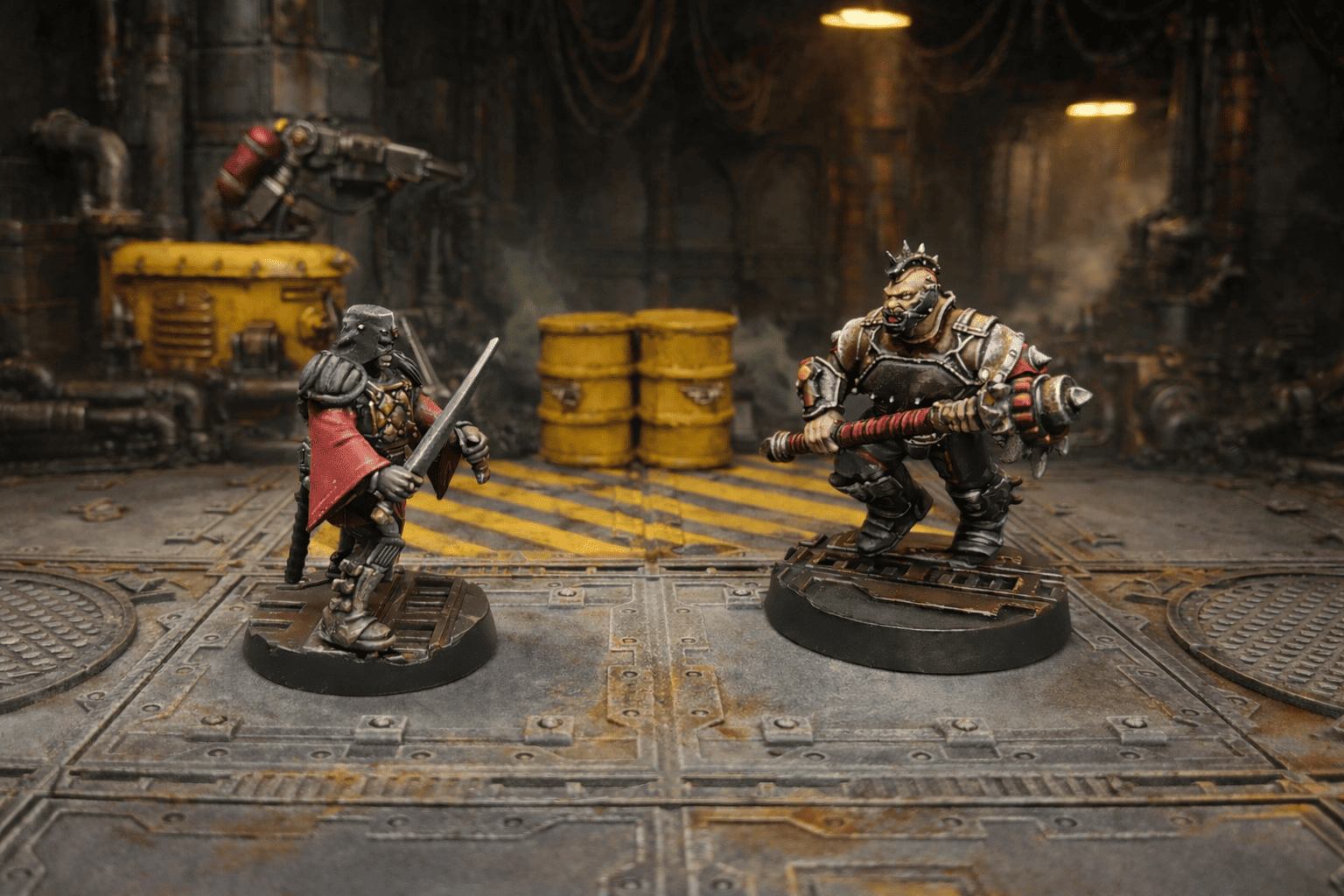
New close combat rules concepts
Rule #1 - ComboBreaker’s rule
Yes, this is entirely his own rule, which he shared with the community quite some time ago. He not only presented the mechanics themselves, but also prepared a very professionally designed rulebook-style document, complete with dedicated pages and illustrative visuals explaining how the system works.
What Works Well:
Interesting alternating mechanic
The use of an alternating attack/defense and critical hits mechanic inspired by Kill Team is genuinely engaging and adds depth to the combat phase.Impressive effort and presentation
It's clear that a lot of work went into designing this rule. The visual presentation is polished and professionally executed, which definitely deserves recognition.
Main Concerns:
Complex and time-consuming
The mechanic is not easy to grasp, especially for new or casual players. From my experience with Kill Team, even though this system can feel dynamic and realistic, it often slows the game down. Players spend a lot of time calculating whether they should block or strike, especially when trying to maximize their impact before a likely death or minimize incoming damage. This leads to frequent mental math and multiple decision branches during each duel.Critical hits and defenses increase the complexity.
The addition of critical strikes and critical defense outcomes adds another layer of rules that can overwhelm even experienced players, as each interaction may involve comparing 2-3 tactical outcomes before deciding.Risk of mutual kills
As described in the final paragraph of the "Duel Showcase", it's very likely that both fighters can end up seriously wounded or even taken Out of Action at the same time. This feels like a natural result of importing Kill Team's system into Necromunda, where most fighters only have 1-2 Wounds. In Kill Team, models often have 8- 20 Wounds. In such cases, it is rare to be killed by a single blow.Delayed Damage and the Loss of Tactical Reactivity
In Kill Team, damage is resolved immediately after each successful strike, allowing players to adjust their tactics on the fly based on the result of each hit. In this proposed system, however, all strikes and defense rolls are resolved first, and wounds are applied afterward. This adds a layer of uncertainty to the melee phase- you don't know the outcome until everything is played out.In Necromunda, where most fighters have just 1 or 2 Wounds, a single good hit is often enough to take them out. Delaying wound resolution in this context reduces the immediacy and tension of combat decisions and makes fights feel less reactive and more abstract.
Domino Effect on Rules
As outlined on page 4 of the document (screen of page number 52), implementing this system would require significant changes to some weapon profiles and traits. That alone already increases the scope and complexity of the change.
However, what's more concerning is the potential for unintended interactions with many other rules that have not been addressed yet. Traits, skills, and special effects tied to the existing melee sequence may no longer function as intended.
This begins to feel less like a targeted fix or improvement, and more like a foundational overhaul- with unclear consequences. It may simply go too far from the original system to be considered a clean or contained rules update.
Design Team Insights
Willem:
The most cohesive, cinematic, and system-mature vision of close combat – logically integrated with Necromunda’s core mechanics and designed for players who seek depth rather than quick fixes.
Willem evaluates Rule #1 very positively, considering it the most refined, logical, and layered close combat variant among all those proposed. In his view, the system intelligently builds upon inspirations from Kill Team, introducing duels based on visibility, parries, and strike sequencing, which makes close combat feel more cinematic and intuitive.
He especially appreciates how strongly this rule is interconnected with other game mechanics — such as vision arcs, backstab, reaction attacks, skills (Marksman, Bulging Biceps, Impetuous), weapon types (sidearms, unwieldy, versatile), and critical hits. In his opinion, the complexity of this rule is not a drawback, as long as it emerges from logical system interactions rather than arbitrary exceptions.
Willem emphasizes that Rule #1 is not a solution for everyone — it is aimed at players who treat Necromunda as an evolving RPG system and are willing to trade simplicity for depth. According to him, attempts to “simplify for everyone” tend to dilute the vision, while this project clearly positions itself as by gamers, for gamers.
In summary, Willem sees Rule #1 as the strongest foundation for further system development — one that has the potential to elevate Necromunda to a higher, more cohesive, and more rewarding level, provided it is clearly documented and consciously implemented.
-
I’m really liking this close combat system. It’s clear it drawn inspiration from the original Kill Team mechanics but expanded on them in a way that adds meaningful depth. The idea that a visible attacker triggers a duel using strikes and defenses (essentially parries) feels intuitive and cinematic — that’s a great design choice. I’m assuming you’re still using the standard 90° vision arc. If so, I like how visibility ties into duels: when the attacker is outside that arc, it naturally implies the target can’t engage in a duel. That also means backstab traits still apply, and reaction attacks can only occur after the initial strike — provided the defender survives and isn’t seriously injured. That nuance feels right; it rewards positioning without overcomplicating the sequence. Your handling of sidearms also makes perfect sense. If a pistol is out of ammo, it’s effectively useless in melee. I would just clarify whether a fighter who runs out of ammo during melee can continue using the sidearm for the rest of that combat, since reloading mid-fight doesn’t seem plausible. Another small detail — if a fighter is armed only with a pistol and no melee weapon, it makes sense they’d still make two attacks: one unarmed, one with the pistol. And if they have no weapon at all, I’d still expect two unarmed attacks, representing both hands.
As for unarmed attacks being at a −1 penalty to hit, I get the intent, but I’d argue a −1 to Strength might be more logical. Hitting someone bare-handed isn’t inherently harder — it’s just less effective at wounding. That change would preserve realism without breaking balance. The critical hit rule on a natural six is another interesting addition. I’d just ask for clarity: does that apply only to close combat weapons, or also to sidearms fired in melee? And if all ranged attacks can crit on a six now, you might consider letting the Marksman skill extend that to fives and sixes, to maintain its edge. Lastly, I like your note about accuracy bonuses. I’m assuming for pistols such as the stub gun regains its original +2 when fired in melee, since that’s effectively point-blank range — and that’s both flavorful and mechanically satisfying. Overall, the close combat system feels cohesive, logical, and well-structured. It’s clear you’ve put real thought into blending realism with balanced gameplay — that kind of attention to detail is rare and genuinely appreciated. As a side note, you might want to consider having the Impetuous skill extend the 1” Coup de Grace range as well, particularly for fighters wielding melee weapons with a Versatile range.
Additional Close Combat Feedback I really like the idea of unwieldy weapons scoring critical hits on a 5 or 6. It gives them that brutal, high-risk feel they deserve. I’m curious though — do you intend for that to apply to ranged unwieldy weapons as well, like heavy guns? And if so, how would that interact with Marksman? Would that effectively push criticals down to a 4+, or would Marksman only improve standard hit rolls? That could open up some interesting (and potentially scary) interactions worth clarifying. Regarding the −1 to hit penalty on unwieldy weapons, I’d suggest removing that penalty if the fighter has Bulging Biceps. It fits the existing logic of the skill perfectly — it represents physical strength compensating for weapon heft, so this feels like a natural extension. As for pistols in close quarters, I like where you’re going, but I’d make one small distinction. If a fighter’s out of ammo and starts swinging with their pistols, that shouldn’t really count as an “unarmed” attack — they’re effectively clubbing someone with a chunk of metal. In that case, I’d drop the −1 Strength penalty. Pistol-whipping should hit at least as hard as a basic melee weapon. Unless we ever get a “Boxer” or “Martial Artist” skill, this would be the most logical ruling. Speaking of which, if you have a bionic arm, I'd lose the -1 Strength modifier as well. You also mention improbable attacks in melee, and that caught my eye. Did I miss something? Because I’m not seeing where you’d ever be rolling a 7+ to hit — under standard modifiers that shouldn’t happen. I’d love to know what conditions would lead to that, or whether it’s an edge-case mechanic you’re experimenting with.
Now, about Versatile weapons. From what I gather, you’re saying that if Fighter A charges and Fighter B has a Versatile weapon, Fighter B can interrupt and effectively halt that charge before A gets to strike. Conceptually, I get it — the long reach gives B first swing — but I’m not fully convinced by the idea that the charge itself is stopped outright. Movement is still movement; you’d think Fighter A could close the distance unless they’re dropped mid-charge. What might make more sense is that the Versatile fighter simply strikes first, representing that preemptive reach advantage. If they manage to take the charger out, the charge fails naturally. But if they don’t, then Fighter A closes the distance and attacks as normal. That preserves the intent of the rule — Versatile weapons being dangerous at reach — without breaking the flow of melee combat. Also, I’d argue that pistols really should count as Versatile weapons operating within short range stats. It makes thematic and mechanical sense — they’re short-ranged weapons designed to be used in tight quarters. But I also get how that might complicate things, since it blurs the melee/ranged divide. Maybe something to explore, though, because it feels very natural in play. If the intention behind your Versatile rule was what I just described — early engagement rather than full charge denial — then disregard my concerns, because in that case I’m completely on board. Side note here would, with regards to charge distance, to seriously consider allowing "Charge Range = Movement + Half Movement, Rounded Down". Makes more sense, than a character with 9" movement, still only being able to charge max 3" further.
On Unwieldy Weapons and Targeting Multiple Enemies I had a thought while reading through your unwieldy weapon rules: it would make perfect sense to let two-handed weapons strike multiple targets. It fits both logic and theme. Every big, sweeping cinematic moment in melee combat — from Sauron knocking aside whole ranks of soldiers to any classic fantasy brawl — shows exactly why that should be possible. The sheer momentum of a two-handed strike should carry through multiple enemies who are close enough together. It doesn’t even need to be complicated mechanically — just something that captures that brutal, sweeping energy. It feels right. Now, regarding your own notes about balance and accessibility, I’ll be honest: your main concerns make sense from a design caution standpoint, but I don’t think they really apply here — not for the kind of players you’re designing for. There’s a huge divide between the “beer-and-pretzels” crowd, who want a quick, casual game night, and the players who treat Necromunda like an evolving world they can live in and master.
I definitely fall into that second camp. I’ve spent years diving deep into video game systems and modding, and more recently I’ve been dabbling in writing campaigns — one in particular that’s still very much in progress. I’ve never run as an Arbitrator, but I think like one, and I’ve finished one immersive board so far, with plenty more to come. I’m fully invested in pushing this hobby toward something richer and more complete. So I don’t think you need to worry about watering things down for broader appeal. You can’t make a system that satisfies both the casuals and the dedicated tacticians. You have to pick a lane. And honestly, you’ve already chosen — this is clearly a project made for gamers, by gamers. You’re not trying to sell it to casuals or push it commercially. You’re trying to elevate Necromunda beyond its chaotic, sometimes unbalanced base rules into something tighter, grittier, and more rewarding. I’d embrace that fully.
Damon Johnson - Wellywood Wargaming:
Thanks this is great! I like all the options presented to be honest. Something I feel is missing though is initiative. I feel like a good tweak would be that the player with higher initiative goes first in any fight, however, you get plus 1 or 2 to your initiative for charging. In the case of a tie with initiative, how about highest duce score total goes first or something? One mechanic I love from all games workshop games is the initiative system from warcry. Rolling a bunch of dice and then selecting doubles triples and quads for initiative is super cool. If there's some way if making that a cc mechanic I think it would he great too but I may be going to far with that/
ComboBreaker:
One thing that has been changed after a few campaigns of playtesting was changing the "crit" bonus effect when 'Striking' to an autowound, similar to how Shock works. Basically imagine all weapons in Hand-to-hand working as a shock weapon (only one to-wound roll is autosuccess for rapid fire or scattershot). This change was to reduce rolling and speed things up, also getting critted by D2 weapon results in a huge overkill if you make a two 2+ rolls instead of one auto-wound roll.
The mini-game is actually fairly fast and definitely faster than other hand-to-hand attempts we've tried so far. But it leads to a domino effect, as many skills and traits had to be reworked from the ground up. In my opinion, changing a lot of traits is needed anyway.
From my experience it does #2, #3 and #4 goals fine, as even an unarmed attack can threaten a champ, if it crits and the champ does not roll a crit in return to block. So any fighter who can charge is a threat, even if it is a lowly WS5+ juve with a bad weapon.
ProjectPanda:
Without a doubt, this is a very well-thought-out mechanic, and an enormous amount of work has clearly gone into its creation. As far as I know, ComboBreaker is still actively developing and refining these rules, and may even be planning to release a new, improved version soon. If that happens, we will most likely cover it in a separate article, as it is genuinely worth attention.
That said, I do have concerns about the overall complexity of the system. In many ways, it feels less like a modification and more like an alternative version of Necromunda altogether — though I understand that this was very much the author’s intention from the start.
Rule #2- Small modification (patch) of the Current Melee Mechanic
Core Concept
In this case, we aimed to design a solution that follows all the initial Design Guidelines for Creating a New Melee Rule in Necromunda.
The core idea is simple: keep the current system, but change how attacks are resolved, based on the fighter's Attacks (A) characteristic.
We only modify the sequence of resolving hits in close combat. Instead of:
“All of the attacker’s hits first → then all of the defender’s hits”
…we break the close combat into alternating attack batches or sequences, limited by the fighter’s base Attacks stat.
Step-by-Step Close Combat Example
A charging fighter (3 base attacks) rolls 6 Attack dice in total (because of charge bonuses, dual weapons, etc.).
He has an Attacks stat of 3 (A3), so they resolve only 3 attacks at first (because that’s their base Attacks stat) in the first sequence.
Suppose they score 2 hits — these are immediately resolved as normal (wound rolls, saves, etc.).The first sequence continues, but now it's the opponent's turn,so the defending fighter acts. They roll their attack dice (e.g., 3 dice total due to gear and skills), but their base Attacks stat is 2 (A2), so they resolve 2 of them.
If both fighters are still standing, sequence two begins and the attacker may now resolve their remaining 3 attacks, and the process continues in sequences.
First Sequence Charge Modifier
To prevent discouraging low-Attack fighters from charging, a special rule could allow charging fighters to resolve at least two attacks in their first sequence, even if their Attack characteristic is 1.
So that means that, when a fighter gains +1 Attack for charging, they may use one additional Attack die in the first close combat sequence. In other words, their attack limit in the first sequence is increased by one die.
What This Achieves:
Minimal Disruption to Existing Rules
This is almost entirely compatible with the current system. No new keywords, traits, or profiles are needed. It simply introduces a new timing method for resolving attacks.
Always a Fighting Chance
In the current rules, a weak fighter charging in gets to throw all their attacks before the enemy reacts — sometimes landing 2–3 hits.
With this version, a fighter with only A1 would normally resolve just 1 attack before the defender reacts. This could discourage risky plays.
That’s why the suggested “minimum 2 attacks on first charge batch” would help preserve the current incentive to charge — while still allowing defenders to respond sooner.Hand-to-Hand Specialists Still Inspire Fear
This system lets weaker fighters act first, but melee specialists get a chance to strike back in between attack waves, instead of standing still and waiting to die.
It feels more realistic — it takes more than one swipe to take down a champion.Balance Between Realism and Fun
Charging still gives initiative and surprise — the attacker hits first (with more than 1 attack).
Defenders, however, are not just passive punching bags; they can react after the first exchange.
Then the fight becomes a flowing exchange where both fighters get to act based on their skill.
This system also gives more weight to the Attacks stat. It becomes a kind of "combat tempo" - showing how quickly a fighter can respond and fight back. Other attack dice (from dual weapons, charge bonuses, traits like Berserker, etc.) still matter, as they increase the total attack dice pool - but the base Attacks stat controls how many can be used per turn in the exchange.
Rule #3 - Original Necromunda 1995 rule
Images shown above are excerpts from Necromunda (1995). All artwork, rules, and trademarks are © Games Workshop. Used here for non-commercial, editorial, and discussion purposes only.
What Works Well:
Tried-and-tested mechanic
This rule is based on a system that has already been used successfully in the past—and it worked quite well at the time.Fully written and ready to use
The rule is clearly described, cleanly packaged, and seems to have gone through more playtesting than Rule #1. That makes it easier to adopt with confidenceQuick to resolve
Compared to some of the more involved mechanics, this system plays out quickly during melee exchanges, helping keep the pace of the game moving.
Main Concerns:
Outdated design
Some players may feel this rule belongs in the past, along with the original edition of Necromunda. They might argue that if you want this style of combat, you should just play the old version.
Personally, even though I have some nostalgia and respect for the first edition, I also find myself looking for something more modern. I’m not fully convinced that merging old and new Necromunda design philosophies is the right direction.Domino effect on rules
Like with the first system, implementing this would likely require changes to many existing weapon traits and interactions. This is an entirely different combat mechanic, built around a different balance model—including things like fumbles and critical hits, which were originally designed with simpler trait structures in mind. It might not fit smoothly into the current ruleset without significant rework.No real chance for low-skill fighters
In modern Necromunda, fighters can gain 10+ Attacks under certain conditions due to wargear combos and special rules.
With this system, more attacks naturally mean more chances to roll criticals (6s), and more damage stacking. Even with bonuses like charging or surprising an opponent, a ganger with average Weapon Skill and only 1 Attack might realistically have no meaningful chance to land a hit—let alone cause a wound. This could make melee feel inaccessible or pointless for less specialized characters.Change stats needed
Of course, it would also be necessary to change the WS statistics from the current system, e.g., WS3+ to WS5, so that the results could be added up. What about Ballistic Skill then?
Design Team Insights
Willem:
On the Throwback to Necromunda ’95 Regarding your nod to Necromunda ’95, I’ll keep it short. You’re right that it’s an outdated system — and while nostalgia has its place, your evolution of the Kill Team combat framework is far more refined and intuitive. It just works better. You’ve already built on a solid foundation and made it stronger, so there’s no reason to look back. Don’t change your winning team; you’ve already improved it. Let Necromunda ’95 stay in 1995.
ComboBreaker:
I think that oldmunda had the best hand-to-hand system, even if it was a bit flawed (parry was a must and two-handed weapons were trash due to rolling 1 less attack die, charging a much melee blender as an average fighter was a really bad idea)
The system is fast (probably just as fast if not faster than modern hth), cinematic and deadly. However, it can't be implemented due to how WS and BS got changed. We've tried running test games where we kept the same profiles, but rolling low was good (with 1's being crits and 6's being fumbles), but majority of players reported it as being weird and unintuitive, because in general you want to roll high and not low.
Oh, right, the full way we played it was you aim to score lower than your opponent; so you took the lowest rolled die and added your weapon skill (so rolling a 1 and adding WS2+ was the best thing you could do). Needless to say, it was completely unintuitive and didn't get past the first test game.
Rule #4 - Inspired by Kill Team – Alternating Strikes
Core Concept
This system simulates a more dynamic and reactive close combat exchange, inspired by real-time duels.
Step-by-Step Close Combat Example
Both fighters roll their Attack dice simultaneously, applying their Weapon Skill to determine hits as normal.
(Example: the charging fighter scores 2 hits, the defender scores 3.)The charging fighter acts first, choosing one of their hits. They can either:
Strike: Resolve the hit immediately by testing against the defender’s Toughness. Armor saves are rolled if applicable
Defend: Cancel one of the defender’s hits by discarding it.
If the defender survives the attack, they now choose one of their own hits, either striking or defending.
This alternating exchange continues until one fighter runs out of hit dice.
Any remaining hits from one side are resolved normally- for example: the defender, with two hits left after the exchange, uses both to strike the attacker.
Optional Critical Mechanic
Hits of 6 can be treated as critical hits, which can only be blocked by other criticals.
What Works Well:
Based on a proven Kill Team mechanic
This system is heavily inspired by the melee rules from Kill Team, which have already been playtested extensively and are known to function well.More responsive and transparent than Rule 1
Because wounds are resolved immediately after each strike, players have clearer tactical choices. The decision whether to strike or defend can be made with full awareness of the consequences.Potentially faster than Rule 1
By removing the need to resolve all actions at the end of the duel, this system could lead to quicker melee resolutions.
Main Concerns:
Charging with low-skill fighters becomes very risky
In this system, a mediocre fighter charging into a melee specialist will likely die before having a chance to deal serious damage.
Their only hope is to critically wound the opponent with their first strike. If that fails, the stronger opponent will retaliate with their full attack pool.
Unlike the current rules, a charge no longer provides a strong enough advantage to justify the risk in many situations.May push the meta toward high-damage weapons only
Players will quickly realize that weaker fighters effectively get only a single real chance to land a meaningful hit before being overwhelmed — for example by a charged Champion. This may push players toward choosing more powerful weapons such as Massive Axes or Massive Hammers.Even if a fighter only has one attack, the focus shifts to delivering one devastating blow that the opponent cannot recover from. Heavier, high-damage weapons are much more reliable in achieving that outcome.
Unfortunately, this could also reduce the value of lighter, more basic weapons — such as swords, axes, or knives. In the hands of less skilled fighters with fewer attacks, these weapons may become far less relevant when facing Champions.
For example, if a Juve charges a Champion with a standard weapon that provides no Strength bonus and only 1 Damage, the odds of actually winning that fight are extremely low. As a result, players may simply stop attempting such bold charges altogether.
Design Team Insights
Linus The Great:
Really like this melee mechanic. In fact, if it wasn’t for the much lower Wounds characteristic in Necromunda, this mechanic could probably work very well. There is a reason why Kill Team operatives have significantly more Wounds — it prevents them from being taken out immediately after a single strike.
In Necromunda, however, many fighters only have one or two Wounds. Because of that, even quite basic melee weapons can take a fighter out with just one successful wound roll. So, to put it simply, I am a bit concerned that the low number of Wounds in Necromunda might not be ideal for this kind of mechanic.
Design Team Insights
ProjectPanda:
To put it simply, this seems to be one of the rules that meets all the initial design goals we set at the beginning. I really appreciate that it doesn’t require too many changes to other parts of the system. Out of all the options we looked at, it’s also one of the easiest to learn and implement in practice.
ComboBreaker:
Overall I think #2 is the best take if you want to keep the changes simple.
A batch of basic Attack characteristic could work. To keep things simple, the attacker always gets a batch of attacks of 2, even if their stat is A1. This would keep charging with a juve a viable thing, also rewards having a pistol+melee or 2 melee weapons.
Rule #5- Initiative-Based Combat
Core Concept
This system aims to simulate the importance of agility and speed in close combat duels.
Simultaneous Attack Rolls
Both fighters roll their Attack dice at the same time, using their Weapon Skill (WS) to determine which rolls are hits.
Initiative Adjustment
Each fighter then subtracts their Initiative value from each successful roll (to a minimum of 0)
Example: A fighter with Initiative 2+ subtracts 2 from each hit die.
The charging fighter receives a +2 bonus to this result.
In case of any ties, the active (charging) fighter wins.
Resolve Attacks in Sequence
Once the adjusted values are set, resolve all hits in order from highest to lowest. Alternate attacks if necessary, with the charging fighter breaking ties.
Step-by-Step Close Combat Example
Charging fighter: Initiative 4+, WS 3+, 6 Attack dice → rolls 6, 5, 4, 4, 2, 1
Defending fighter: Initiative 3+, WS 3+, 4 Attack dice → rolls 6, 4, 1, 1
Now apply Initiative adjustments and bonuses:
Charging fighter subtracts 4 (Initiative) and adds +2 for charging → results: 4, 3, 0, 0
Defending fighter subtracts 3 → results: 3, 1
Resolve the hits in order:
The charging fighter strikes first with two hits (wins ties on 3s).
Then the defender makes two attacks, and so on.
What Works Well:
Gives Initiative a more meaningful role in melee.
Encourages players to value and upgrade Initiative more strategically.
What Doesn’t Work:
Charging with low-Initiative fighters becomes much riskier.
Could push the meta toward high-damage weapons.
Parry becomes significantly stronger, as it can influence attack order by pushing down enemy results.
Design Team Insights
Linus The Great:
The concept itself is very interesting. However, what seems like simple math at first glance may not be that simple in practice. You actually need to do a fair amount of counting and comparing dice to determine who acts first and how the attacks are resolved. In the end, this can lead to a system where mistakes are relatively easy to make.
ComboBreaker:
I think that initiative could be made more impactful without having to put it into HtH combat; HtH already relies on an two stats (WS/A) to work, you also need a decent M" and ideally some way to negate pinning. Adding initiative on top of that is too demanding if you compare that to shooting, which only need BS and clear line of sight.
Linus The Great:
Yeah, fair enough it’s really interesting, but the Juves are totally screwed here. There’s no guarantee that even after charging, they’ll manage to land one or two hits before they die because they will die. A Champion, even when charged, still has a better chance of rolling at least one equal or higher result.
There is a new problem I found after testing. Only mechanic number 2 is holding up so far, also when fighting against more than one model.
In the other mechanics, especialy where Initiative is included, the fight becomes very complicated when there are many models. You must roll all the dice at once and then sort them for everyone at the same time. and all that math too it gets quite crazy, you know :}
Rule #6: Initiative-Based Dodge System
Core Concept
This mechanic builds upon Rule #2, adding an additional layer that allows fighters to dodge attacks using their Initiative.
Similar to Rule #5, Initiative becomes a much more meaningful stat during melee.
How it works
In short, dice from a fighter’s pool can now be used not only for attacks, as in Rule #2, but also for dodges, which require a successful Initiative test.
Everything follows the process from Rule #2, with the following adjustments:
Attack Pools
Both fighters roll all their Attack dice at once to determine how many hits (successes) they score. These hits form their attack pool.Charge Bonus
The charging fighter has an Attack characteristic of 2.
Because of the charge, they can make one extra strike in the first exchange — so in this case, 3 attacks total.Dodging Attacks (New Mechanic)
The defending fighter may choose to spend some dice from their own pool to attempt dodges.
They can use up to as many dice for dodging as their Attack characteristic allows.
Example: If the defender’s Attack stat is 2, they can roll up to 2 dice to dodge, even if the opponent attacks with 3 hits.Initiative Tests
For each die spent on dodging, the defender makes an Initiative test.
Each successful test cancels one incoming hit.Resolve Remaining Hits
If the defender avoids two hits but one still goes through, that remaining hit is immediately resolved as a normal attack (to wound, armor saves, etc.).Counterattack
If the defender survives, they can then decide what to do with their remaining dice — again, using no more than their Attack characteristic in that round.Continue Until Pools Are Empty
The combat continues until both fighters have exhausted all dice from their attack pools.
What Works Well:
Gives real value to the Initiative stat, making it a key factor in melee through dodging.
Adds tactical depth — players must decide between offense and defense each round.
What Doesn’t Work:
If both fighters have roughly the same number of dice (difference of 1 or less), melee exchanges could last longer, as many attacks will be dodged. Successful hits that can actually take someone down will become rarer.
If one fighter has 2–3 or more dice than the other, the one with the larger pool becomes much harder to defeat, since they can dedicate more dice to dodging early and then strike freely once the opponent’s pool is depleted.
This may lead to pre-charge calculations, where players compare attack pools before committing.
If the difference is 2 or more dice, it could discourage charges — since fighters with fewer attacks will often fail to break through dodges, especially against Champions with Initiative 3+ or 2+.
For Juves or low-attack models, charging such opponents may feel too risky, as their first strike round might deal no hits at all.
Rule #7
Core Concept
Limiting the number of attacks per turn.
Keeping almost all rules without modification.
Simplicity.
Maintaining the system's logic – utilizing existing mechanics.
The Attacker's number of attacks is influenced by the defending model's Attack characteristic.
How it Works
A rule is added to: CLOSE COMBAT point 3. DETERMINE ATTACK DICE
“The number of Attack dice rolled is equal to the fighter’s Attacks characteristic, plus the following modifiers:
Dual Weapons with the Melee or Sidearm trait (+1)
Charging (+1)”
Skills, etc.
We calculate the Potential Attack Pool (PAP) for each combatant – the attacker and the defender. This means it is the sum of the attacks that the model can perform at that moment.
We compare the Attacker's PAP and the defender's PAP.
If the difference in PAP is more than 2 times smaller (Attacker's PAP < Defender's PAP / 2) you can only make 2 attacks (e.g.: 1 to 3, 3 to 7).
If the difference in PAP is less than or equal (Attacker's PAP < = Defender's PAP, but not more than 2 times smaller) you can only make 3 attacks (e.g.: 1 to 2, 3 to 6, 8 to 8).
If the difference in PAP is greater (Attacker's PAP > Defender's PAP, but not more than 2 times greater) you can only make 4 attacks (e.g.: 3 to 1, 3 to 2).
If the difference in PAP is more than 2 times greater (Attacker's PAP > Defender's PAP x 2) you can only make 5 attacks (e.g.: 4 to 1, 5 to 2, 10 to 1).
⚠️Note:You cannot make more attacks than you would normally inflict. For example, if both fighters have a PAP of 2, the attacker cannot make 3 attacks as would result from the calculation above.
Reaction attacks
This works the same way as above – however, remember that your number of attacks may now change if, for example, skills or other factors cause your attacks to increase or decrease. If this happens, recalculate your PAP and compare the new value to your opponent's PAP (they still maintain their PAP from the start of the combat – unless skills or other factors cause their attacks to increase or decrease).
Summary
Models with a very high number of Attacks will still be relatively strong against models with a lower number. Two Champions who fight similarly — having a comparable number of attacks — will be a tougher target to kill. The maximum of 2 attacks in case of a large difference in Attacks is somehow a compensation for more experienced models for the lowering of their combat value.
The rules may not be ideal, but they adhere to the logic of the entire system without the need to modify other rules. They simply establish the maximum number of attacks you can perform per turn.
It will still be worthwhile to invest in Attacks to achieve the best possible PAP (Potential Attack Pool) and thus roll a higher number of dice.
Models with a low number of Attacks will still perform 2-3 of them per turn. Let's remember that the Close Combat characteristic will become significant. You will have fewer dice, so you will want a greater chance of hitting your opponent.
The comparison of the Attack characteristic is intended to account for the fact that the second model is also participating in this fight. As a result, the number of strikes is limited, but it is still worthwhile to charge to improve your PAP and attack first.
Moreover, the change is small enough that introducing it into the game will not overly complicate it.
Of course, models that used to perform some absurd number of attacks when charging will suffer greatly from this, but on the other hand, they will still roll 5 dice, which should remove most other models from the table in the majority of cases.
For the VERSATILE rule, simply calculate the PAP for both combatants, but the defender, unless they possess a weapon with the VERSATILE trait, will not be able to react.
Design Team Insights
ProjectPanda:
Just when we thought there was nothing new or interesting left to come up with, another idea emerged. This one feels a bit like comparing the strength of a hit to the opponent’s Toughness — but instead, it compares the number of attacks to determine how many can actually be used to strike.
I have to admit, this is another mechanic that seems relatively easy to implement. It also feels fair, and importantly, it doesn’t require major changes to other parts of the system.
In my opinion, it meets all four of the design goals we set at the beginning. And honestly, alongside Rule #2, this is the other option I personally like among the simpler solutions.
Final Thoughts
Another idea worth considering is drastically simplifying close combat by reducing the number of attacks in the game. In such a system, the number of strikes a fighter can make would equal their Attacks characteristic. A regular ganger would strike once, a Champion twice, and only the most legendary close combat fighters would reach three strikes. All other bonuses — such as extra weapons, combat drugs, special rules, or traits like Paired — would either need to work differently or possibly be removed entirely. This could make melee combat more balanced, more interesting, and easier to follow.
One could keep thinking about different possibilities for a long time, searching for the perfect solution. After all, the real problem may be that there are too many attacks in the current system…
The rules presented in this article are, of course, not the only possible solutions. Close combat in Necromunda is a complex topic, and it is very likely that if we had spent several more weeks or months working on it, we would have discovered many other interesting mechanics worth exploring. This process alone has shown us just how many different directions such a redesign could take.
It is also entirely possible that some of you have already experimented with your own ideas or developed alternative approaches that we have not encountered yet. If that’s the case, we would genuinely love to hear about them. One of the strengths of the Necromunda community has always been its creativity and willingness to experiment.
Our goal with this article was simply to gather several different approaches in one place and give players the opportunity to look at them, compare them, and form their own opinions. Perhaps one of these mechanics will inspire you enough to try it out with your own group. Or maybe it will simply spark new ideas and discussions about how close combat could work.
In the end, there may not be a single perfect rule or one universally correct path. Different groups will prefer different solutions — and that’s completely fine.
If you have thoughts, feedback, or your own experiences with these mechanics, feel free to share them with us. We’re very curious to hear what you think.
The Underhive has never followed a single rule — and perhaps that is exactly how it should be.